How Do Scented Candles Work?
A scented candle and a wax melt reach the same result by two different routes. In a candle, the flame consumes the wax: the wick draws it up in liquid form and burns it, releasing fragrance along with heat. In a wax melt, the wax never burns: a tealight warms it from below in the dish of a warmer, the fragrance evaporates and the wax stays put, to be replaced only once it has stopped smelling.
That one difference explains everything else: burn time, scent strength, cleanup, and the typical beginner mistakes. Below are the two mechanisms one by one, with safety rules from industry sources.
The candle: a wick working as a fuel pump
The National Candle Association describes the wick as a fuel pump: the flame melts the surface wax, the braided fibres pull it up by capillary action and feed it to the flame. The balance can fail both ways: too much fuel and the flame flares and soots, too little and it sputters out. That is why the NCA tells you to trim the wick to 1/4 inch (about 6 mm) before every burn: it is the single rule that does most to prevent high flames and soot.
Soot, by the way, does not depend on the wax type. In its wax overview the NCA is blunt: there is no such thing as a soot-free wax, all candle waxes burn in the same manner, and the main factors are wick length and flame disturbance. A smoking candle needs correcting, not replacing: shorter wick, and away from drafts.
The wax melt: heat without burning the wax
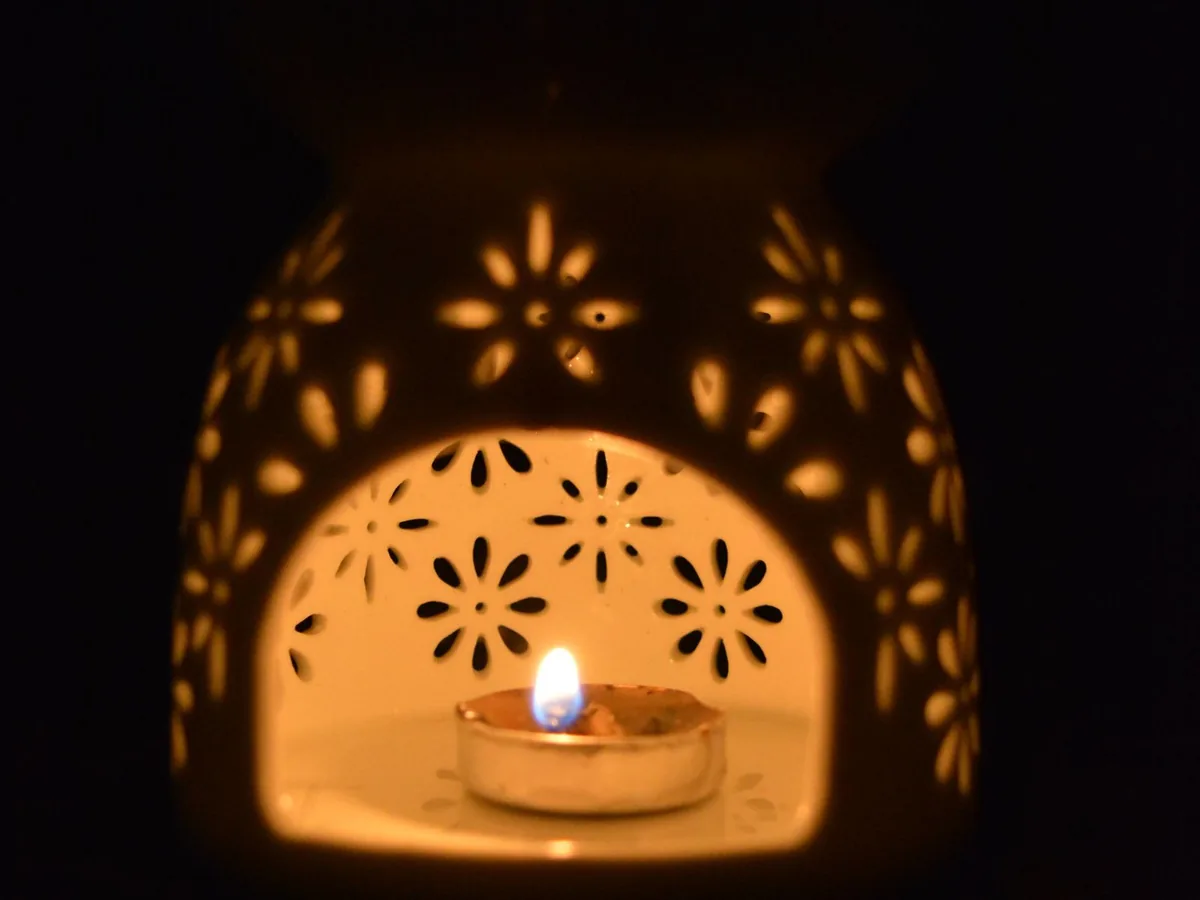
In a warmer the flame works indirectly. The tealight in the lower chamber heats the ceramic dish; the melt resting on top liquefies and releases its fragrance oils by evaporation. A standard tealight, which per the Wikipedia entry measures about 38 mm across and 16 mm high and gives off roughly 32 watts of heat, is all it takes to bring the dish to working temperature.
Because melt wax is not consumed, the end point is something you smell rather than see. When no scent comes off the dish even with the warmer lit, the oils have evaporated and the melt needs replacing; the leftover wax, now odourless, pops out once solid with light pressure. How to do that without scratching the ceramic is covered on the products page.
How long to burn, and when to stop
Industry sources converge on similar timing. Manufacturers ask you to follow the instructions of the specific product; as a practical reference, the candle-making school CandleScience defines the standard burn cycle as 4 hours and explicitly warns against "power burns" beyond 4 hours, which overheat both container and wax. Consumer habits already match: about three in four candle users burn candles for 4 hours or less per sitting, according to NCA data.
The point to stop for good is measurable too: the NCA recommends not burning a container candle past the last 1/2 inch of wax, and stopping at 2 inches for freestanding candles. Below that line the flame works too close to the base and the glass.
The safety rules, in short
- Never leave a flame unattended, not even a tealight inside a warmer.
- Keep at least 12 inches between any flame and curtains, books, bedding or anything flammable.
- Stable, heat-resistant surface; multiple candles at least 3 inches apart.
- No drafts: open windows and fans stretch the flame and leave soot.
- Do not move a candle or warmer while the wax is liquid; keep out of reach of children and pets.
Rules: NCA, Candle Safety Tips. In Europe, fire-safety requirements for indoor candles are set by EN 15493 (updated in 2026), with sooting behaviour covered by EN 15426:2018.