White Tealight Candles: Uses and Benefits
White tealight candles, the small cupped candles the Italian melt tradition calls "Tilli", are the quiet engine of the wax warmer system: uncoloured, unscented wax, a metal cup, a short wick. No fragrance of their own, so they never compete with the melt they are heating.
They all look alike and they are not: size, wax and declared burn time change both performance and safety. Here is what to look at.
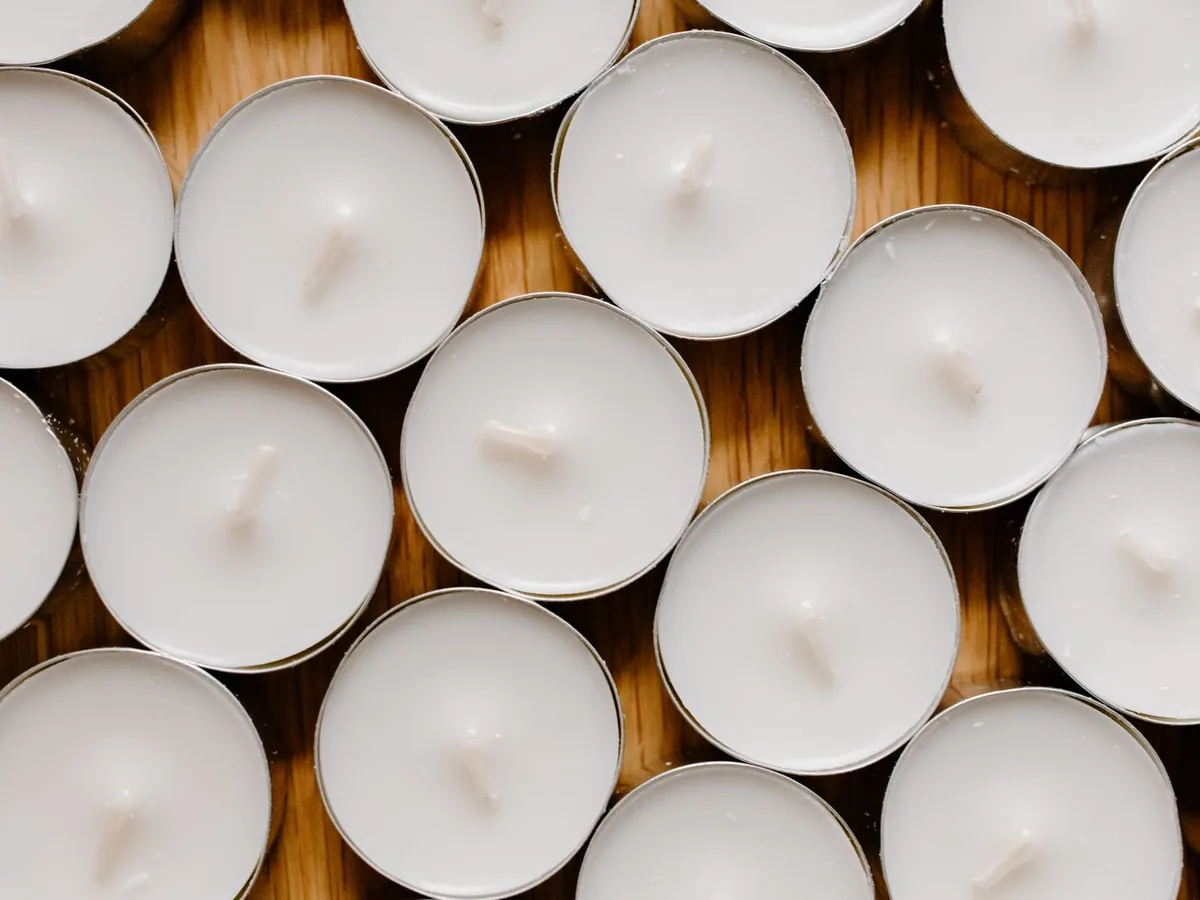
The standard size, and why to respect it
The warmer tealight is a de facto standard: according to the Wikipedia entry, the common format measures about 38 mm across and 16 mm high, in a thin metal cup, the most widespread material, designed so the wax can melt completely without dripping. The same source puts the heat output at around 32 watts: that is the power wax warmer chambers are sized for. "Maxi" formats exist for other uses; in a standard chamber they overheat the dish and degrade the melt's fragrance.
White and unscented: a technical choice
The white of a quality tealight is the absence of additives, not styling: no dyes to stain the cup, no fragrance to stack on top of the melt's. On wax type, the National Candle Association's overview settles a common doubt: no wax is "best", well-made paraffin, soy and blends burn in the same manner, and paraffin remains the most used wax worldwide. What matters more than the material: a centred wick, dense wax, and a burn time declared by the maker.
Burn time: how to read it and use it
A tealight's burn time belongs on the packaging, because it depends on format and wax; the useful figure is the cost per hour of flame, not the price of the bag. As a usage reference, CandleScience defines a candle's standard burn cycle as 4 hours and warns against longer sessions without a break: for a warmer, that means one tealight per session is the right measure, and a weekly supply is quick to estimate from the evenings you plan.
Buying and usage checklist
- 38 mm diameter: fits the chamber without forcing or rattling.
- White wax, unscented and uncoloured; centred wick.
- Burn time declared on the pack: you need it to compare and to plan.
- Undamaged cup: a dented cup tilts the wick and heats unevenly.
- Always light it inside the warmer, never as a bare candle on furniture.
- NCA flame rules: never unattended, 12 inches from anything flammable, no drafts.
Where they fit in the kit
In the three-piece system described on the products page, tealights are the regular consumable: melts change when the scent runs out, the ceramic lasts years, the candles are counted in sessions. Keeping a stock of the right size prevents the classic fallback of grabbing a scented tealight "because it was in the house", with two fragrances fighting and a result that resembles neither.
Frequently asked questions about tealights
How long does a tealight candle burn?
Read the burn time on the pack, because it depends on the maker's format and wax. The rhythm reference comes from CandleScience: a standard burn cycle of 4 hours, with no longer unbroken sessions. In practice one tealight covers one warmer evening, and a stock is planned by counting evenings.
Can I use tealights in any wax warmer?
In the standard 38 mm format, yes: that is the size warmer chambers are built around. The only check is chamber access, which must take the cup without forcing; maxi formats run outside the spec, overheat the dish and belong to other uses.
Are white tealights unscented?
Yes, and it is a technical choice, not a shortcoming: white wax with no dyes and no fragrance, because under a scented melt only clean heat is wanted. A scent of its own in the candle would stack onto the disc's, the classic mistake flagged in the checklist above.